
Engines are revving, legacy is purring, and my friend Ollie Leston is working with craftsmanship so classy he probably wears racing gloves to brunch. I know him, so this is an interested observer’s view. The brand gives me a good excuse to look under the bonnet of segmentation, targeting and positioning.
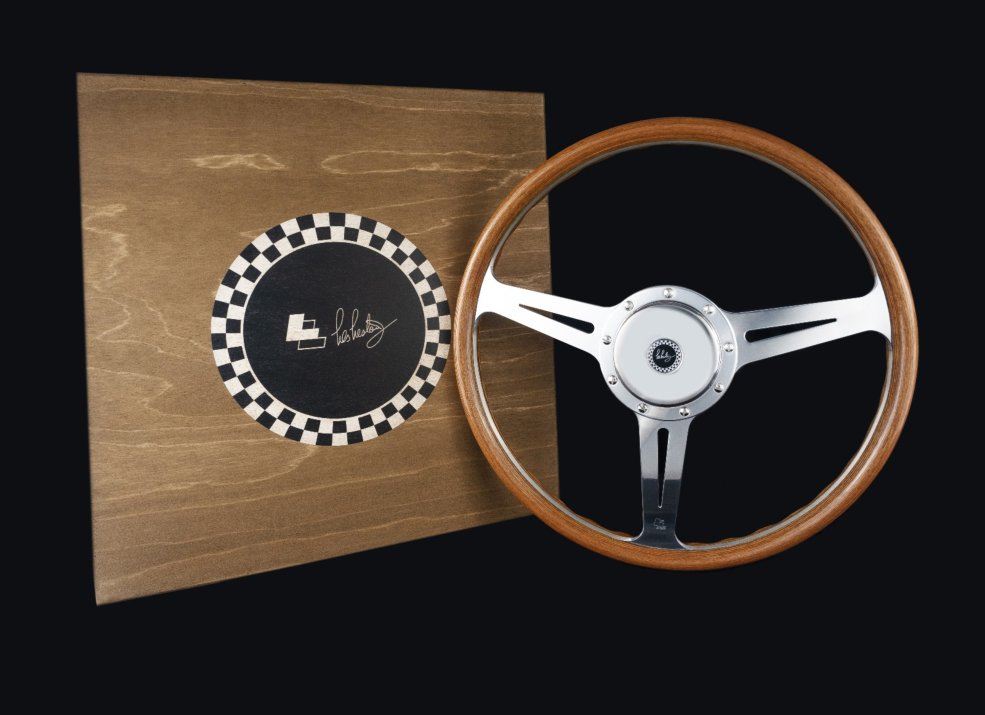
Les Leston’s wooden and aluminium steering wheels invite a reading through craftsmanship and racing heritage. A wheel has a practical job, of course. But for a particular buyer, it can also carry style, memory and identity.
I would begin with benefits and lifestyle rather than assume the audience is everyone with a licence. Three possible personas come to mind: the Gentleman Restorer, who treats WD-40 like aftershave; the Heritage Collector, who might display the wheel like a sculpture; and the Neo-Vintage Modder, who blends old-school soul with a modern build. These are proposed segments to investigate, not verified customer profiles (Wedel & Kamakura, 2012; Solomon, Marshall & Stuart, 2020).
Each values something slightly different. The restorer may prioritise authenticity and fit. The collector may care more about history and provenance. The modifier may be looking for the meeting point between appearance and function. Those differences matter to the message, the offer and where the brand finds its audience.
A differentiated approach could speak to those groups without shouting through mass advertising (Kotler & Keller, 2016). I picture a team-radio message to the right garage: precise, recognisable and relevant. Emotional branding offers a lens for the identity involved, while also reminding us that a brand’s meaning is not entirely in its own hands (Thompson, Rindfleisch & Arsel, 2006).
With apologies to Magritte: “Ceci n’est pas un volant.” This is not merely a steering wheel. It is a symbol of legacy for the person who sees it that way.
I would frame the position around three kinds of value: functional craftsmanship, the emotion of nostalgia and the symbolic connection to motorsport. Heritage can support authenticity, but the details must substantiate the story (Beverland, 2005). Customer intimacy is another useful lens for a specialised offer (Treacy & Wiersema, 1993).
Where could that lead? Limited editions, customer restoration stories, a configurator, or collaborations with vintage-car events and builders. “Monza Series” and “Silverstone ’58” are my illustrative names, not existing product announcements. Each idea should strengthen the same recognisable position rather than add noise.
In a world of plastic paddles and touchscreen dashboards, craftsmanship still has a chance to corner with style. The car may age; the driver may retire; the object can keep its meaning. Les. Is. More. And yes, my friendship makes me an enthusiastic spectator.
References.
- Beverland, M. (2005) ‘Crafting brand authenticity: The case of luxury wines’, Journal of Management Studies, 42(5), pp. 1003–1029.
- Kotler, P. and Keller, K. L. (2016) Marketing Management. 15th edn. Harlow: Pearson Education.
- Les Leston Ltd. (n.d.) Les Leston Official Website. Available at: https://www.lesleston.uk/ (Accessed: 28 March 2025)
- Solomon, M., Marshall, G. and Stuart, E. (2020) Marketing: Real People, Real Choices. 9th edn. Harlow: Pearson.
- Thompson, C. J., Rindfleisch, A. and Arsel, Z. (2006) ‘Emotional branding and the strategic value of the doppelgänger brand image’, Journal of Marketing, 70(1), pp. 50–64.
- Treacy, M. and Wiersema, F. (1993) ‘Customer intimacy and other value disciplines’, Harvard Business Review, 71(1), pp. 84–93.
- Wedel, M. and Kamakura, W. A. (2012) Market Segmentation: Conceptual and Methodological Foundations. 2nd edn. New York: Springer.