What Would Count as an Effective Squatty Potty Campaign?
A campaign evaluation needs several measures: return relative to cost, conversion, customer acquisition cost, engagement and brand awareness. Sales can show commercial response, while shares, comments and search activity help explain how attention is developing. No single number answers the whole question.
What the conversion calculation can—and cannot—show
Consider the reported figures of $1 million in sales and 158,000 website visitors, with an assumed purchase value of $30.
Dividing $1 million by $30 gives approximately 33,333 purchases.
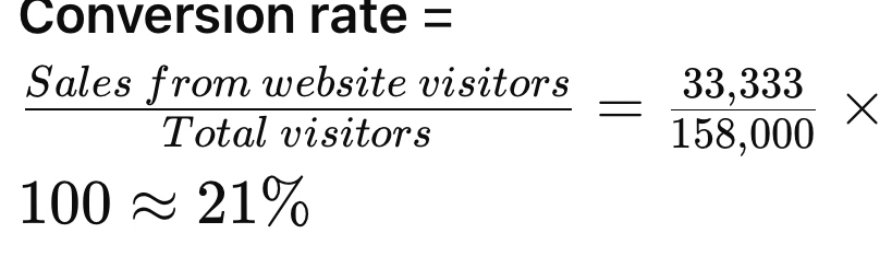
If those purchases and visits came from the same period and channel, and each purchase corresponded to one converted visitor, the implied rate would be:
Illustrative visitor conversion = assumed converted visitors ÷ total visitors × 100 = 33,333 ÷ 158,000 × 100 ≈ 21%.
That is an illustrative calculation, not proof of the actual visitor conversion rate. Average order value, channel attribution and the period covered all need to match before the result can support a performance claim.
The qualitative side of effectiveness
Other qualitative metrics include:
Brand Sentiment: Social media comments and discussions can gauge how people perceived the campaign. Squatty Potty’s humorous and irreverent tone could have polarized some audiences, making this metric critical. Media Coverage: The amount of free press and media coverage generated by the campaign. Customer Testimonials & Reviews: Positive reviews could reflect how well the campaign’s message was received and its impact on customer satisfaction. Long-term Brand Loyalty: Survey or customer retention data could indicate how many first-time buyers turned into repeat customers, showing if the campaign had a lasting impact.
Connecting exposure with purchases
Multi-touch attribution could help reveal whether a viewer buys later through another platform or channel. A short post-purchase survey could also provide useful context, although I personally tend to skip those. The method has to account for the people who never answer.
Question the audience assumptions
In my own experience in the US, Facebook was a place where mothers bought and sold items and followed community updates. That made it feel relevant to the campaign, but personal experience is not a complete demographic profile. Audience choices should be tested rather than treated as exclusive.
Different creative versions could explore responses from men, older adults and audiences outside the initial market. The humorous tone may appeal differently across groups, so targeting and creative should be tested together.
A memorable campaign creates an opportunity. Good measurement shows which parts of that opportunity become sales, stronger perceptions and lasting customer relationships.