
At an MOT centre, the differences between customers are hard to miss. Some people come in regularly and take great care of their cars. Others mainly appear for the annual MOT. Then there are the drivers who arrive because something has started rattling or flashing on the dashboard.
Sending the same reminders and offers to all of them can miss those differences. A one-size-fits-all message may reach everyone while saying very little to each person.
This is where cluster analysis interests me: it offers a way to examine patterns in a mixed customer base before deciding how to communicate. Research on motorists’ repair decisions and customer satisfaction provides a useful background to that question (Motor Ombudsman, 2025; Institute of Customer Service, 2024).
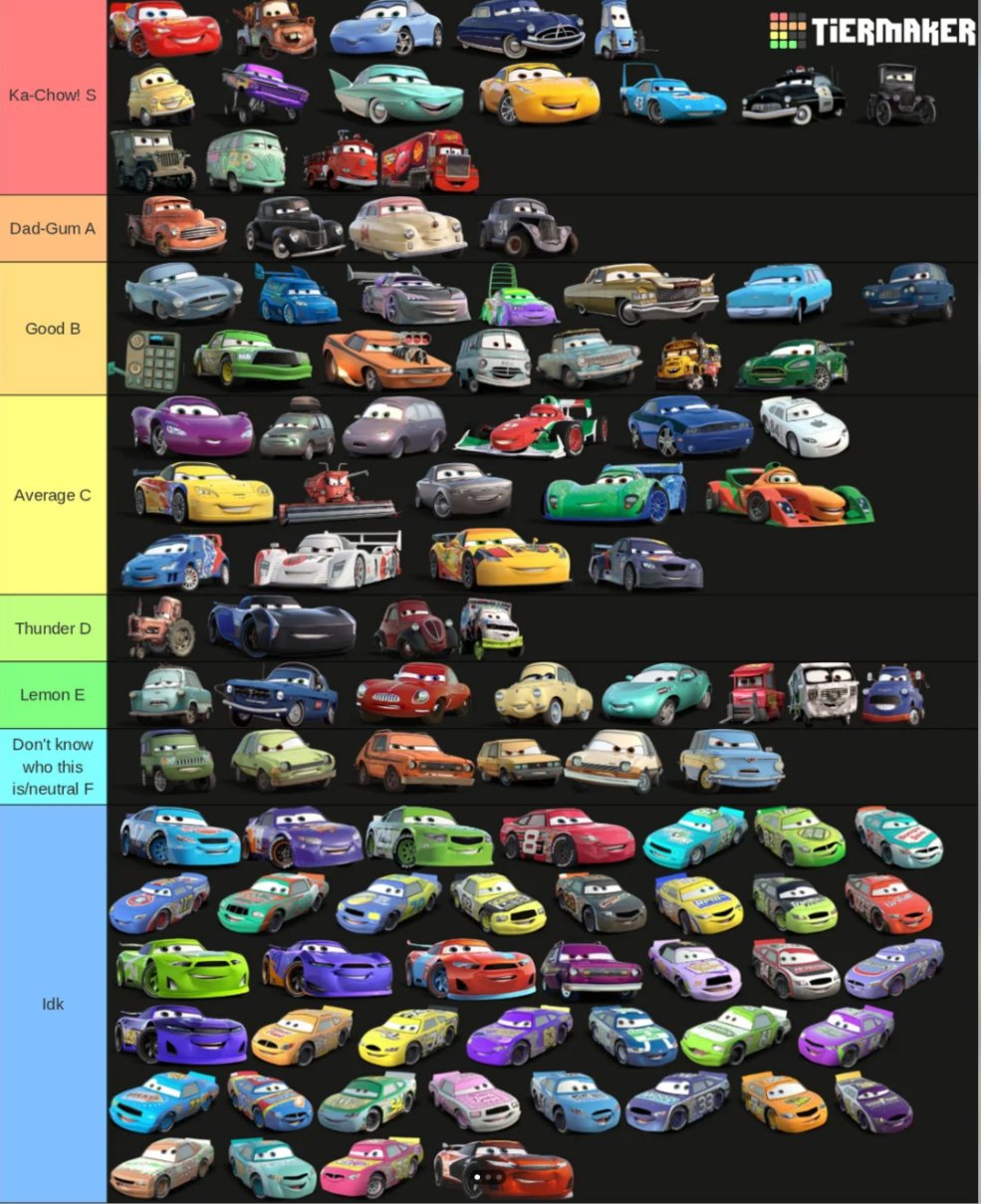
To make sense of the possibilities, I picture the customers a bit like the characters from Disney-Pixar’s Cars. “Lightning McQueen” is always on the move and needs regular attention. “Sally” is steady, loyal and organised. “Mater” brings an older vehicle and an unexpected issue. “Chick Hicks” is price-focused and mainly appears for the annual test. This is a mental shorthand for possible needs, not a set of measured clusters.
The problem with one message for everyone is that a business can assume customers all want the same offers, timing and service. That makes it difficult to prioritise or tailor communication.
Cluster analysis could help investigate whether meaningful groups appear in the customer base. Candidate variables include how often people visit, what they typically spend, the age of their cars, the repairs they need and whether they respond to particular reminders.
If the patterns support them, possible applications could include preventive-maintenance reminders for high-mileage “McQueen” drivers, timely MOT offers for “Chick Hicks”, loyalty benefits for “Sally”, or follow-up care for “Mater”. These are illustrations to test, not groups we have already measured. The aim is useful communication without over-saturating people with irrelevant promotions.
There is also a choice about what to group: individual customers or individual vehicles. Customer-level patterns may suit a marketing question, while vehicle-level patterns may be more useful for maintenance. The unit of analysis should follow the decision we want to make.
I would start with a manageable set of variables, checking for unnecessary duplication and strong correlation. Behavioural candidates include visit frequency, annual mileage, MOT history, repair types, average spend and whether people book early or at the last minute. Vehicle age and brand category add another dimension; distance from the garage gives geographic context.
Where survey data is available, I would also be interested in trust in the mechanic, comfort with visiting garages, perceived fairness of pricing and expectations about service speed. Some people may want reassurance, others speed, others savings. Those are hypotheses worth investigating.
M.C.Q.S. is my McQueen-inspired reminder for the process:
M: Meaningful variables. Choose information that matters to the question.
C: Cluster procedure. Choose a method suited to the data; hierarchical clustering and k-means are possible tools.
Q: Quality check. Examine whether the groups are coherent, interpretable and useful.
S: Segment stories. McQueen, Sally, Mater or Chick Hicks can help a team remember a segment—as long as the characters follow the evidence, rather than decide it.
References.
- AutoRepairFocus (2024). Garage anxiety remains a problem for UK consumers.
- Institute of Customer Service (2024). UK Customer Satisfaction Index – Automotive Sector.
- Kotler, P., Keller, K. & Chernev, A. (2022). Marketing Management.
- Motor Ombudsman (2025). Poll on consumer repair and maintenance behaviour.
- Parasuraman, A., Zeithaml, V. & Berry, L. (1988). ‘SERVQUAL: A multiple-item scale for measuring consumer perceptions of service quality.’
- Smith, W. (1956). ‘Product Differentiation and Market Segmentation as Competitive Strategies.’
- Wedel, M. & Kamakura, W. (2000). Market Segmentation: Conceptual and Methodological Foundations.
- Disney–Pixar (2006). Cars