
The question of what is enough makes me reflect on what we consume, how we understand need, value, and wellbeing. I inevitably return to the way my grandmother lived and how different her relationship to consumption was. She lived through two wars, had very little materially by today’s standards, and yet never appeared to live with a sense of lack. She would go to the supermarket in the morning to buy half a loaf of bread and return if needed in the evening to buy the other half so it was fresh and not waste bread by buying to much(I just guiltily threw out some bread that went bad today). She cooked healthy in season local food from scratch for everyone and made it stretch if more people arrived. She washed dishes by hand(or made us do it), reused the dishwater to clean surfaces, wipe floors, water plants, and sometimes even do laundry, and My dad said when he was a child that water was first for the children to bathe in then for all the rest mentioned (boy, I hope they didn’t pee in it) then hung everything outside to dry, which made her clothing that she had been wearing for 40 years still look amazing, thanks to her mending it when needed. Every jar every box every yogurt container was reused, repurposed, up-cycled. What stands out is how resourceful she was, and mostly how content she seemed with very little. That sense of enough also makes me think of the accounts of everyday life in The Blue Zones (Buettner, 2012).
Food, in particular, she went to a potato farmer(or send us, child labor was alive and well), because it was local and because she knew the family and wanted to support them. The farmer was a widower with four children, and my father even had a small job as a child helping to distribute potatoes. She knew whether the crop was doing well or struggling, whether there had been too much rain or too little, and the whole community felt those changes together. Eggs came from one farmer, meat from a specific butcher, vegetables from people she spoke to regularly and exchanged goods. That effort alone created value. When food represents time, labour, weather, and relationships, wasting it feels sacrilegious. That’s why you had to sit at the table and finish your food(like Japan portions were controlled) or never leave the table again.
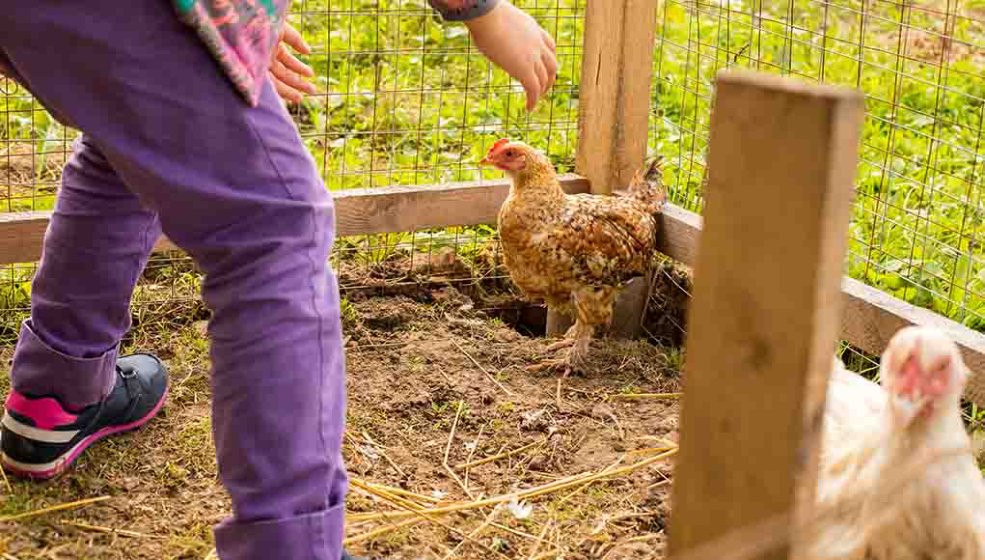
One story that captures this difference particularly clearly came from a friend of my father’s, who described what eating chicken meant when he was growing up. If you wanted chicken, first you had to chase the chicken, which could take hours and left you physically exhausted. Then you had to pluck it, clean it, gut it, and prepare it for cooking. By the time the meal was ready, much of the hunger had already been worked off through effort alone. The result was You did not feel like eating chicken every day. Effort acted as a natural regulator of consumption. Meat was eaten sparingly, not because of ethical campaigns or environmental calculations, but because it was hard work.
This stands in stark contrast to modern consumption. Today, it is possible to buy 12 chickens in bulk on offer, already butchered, packaged, and stripped down to specific cuts. My husband, for example, was bulking and buying large packs of chicken breast. The numbers add up quickly because effort is no longer a limiting factor. When food is reduced to an anonymous product on a shelf, consumption can easily exceed what is reasonable or necessary. Producing food carries environmental costs, though those costs vary considerably by product and production system (Poore & Nemecek, 2018). Plus think of all the freezers needed from factory to home.
Enough was established by what could reasonably be carried, cooked, stored, and shared. In contrast, my own life is shaped by supposed convenience and constant availability. Groceries, household items, clothing, and even small treats arrive at my door with minimal effort. Despite this, I feel perpetually rushed and behind and would love to buy anything the marketing says on Amazon will make my life easier with one click next day delivery.
This shift has implications for greenhouse gas emissions. Modern consumption relies on production, packaging and transport, and food systems carry environmental costs across that chain (Poore & Nemecek, 2018; EPA, 2023). When a poor local harvest is answered by stock arriving from elsewhere, it becomes easier for the buyer to lose sight of the weather, labour and resources behind the food.
A small but telling example of this disconnect occurred when my child recently said he missed Bazooka gum from the US. My immediate instinct was to order it online, as it would have cost very little and arrived quickly. When I stopped to think about it, I felt ashamed. A low-value item would require long-distance transport, warehousing, packaging, and final delivery, all for a few seconds of enjoyment. Without measuring that delivery’s footprint, I could still question whether the resources involved felt worth those few seconds of enjoyment. This kind of decision has become normal because convenience hides consequence, even when the cumulative impact is significant (IPCC, 2023).
Conversations with my lovely centenarians Neighbors reinforced this. They described a gradual but very visible shift over their lifetimes. When they were young, most people had little, and because of that, they shared more and compared less. During this time, they had the best Relationships with their neighbors just like my Oma and hers. As material abundance increased, even when financed through loans, people began to display more, erect fences, and grow more distant from their neighbours. Possessions became signals of success, and the pressure to keep up intensified. Despite having more, people seemed less content and more anxious, constantly working to maintain appearances and feeling as though they were never quite enough.
Marketing plays a significant role in sustaining this pressure. When has it ever suggested that we need less? You weren’t fully happy because you didn’t have this. If you buy this, it will solve your problems and you’ll be happy. Ultra-cheap platforms selling disposable goods shipped long distances normalise this behaviour.
Conversations I had with Indigenous people in Connecticut and New Mexico also challenged my assumptions about ownership and accumulation. The people I spoke with described possessions through use, sharing and balance, rather than the success of collecting more. I was struck by how different that felt from the Western habit of treating a full house as evidence of a full life.
Those conversations made me want to think more carefully about balance, reciprocity and responsibility, themes explored by Cajete (2000) and Deloria (2003). They also sit alongside psychological research linking materialism with lower wellbeing (Kasser, 2002). Accounts of long-lived communities emphasise daily activity, food habits and social connection (Buettner, 2012). I do not need to turn every past way of living into an ideal to recognise something valuable in that combination.
Taken together, these reflections suggest that the challenge of sustainability is not simply technical but cultural. For me as a consumer, this means questioning purchasing habits, recognising the role of marketing in shaping desire, and prioritising sufficiency over convenience. Practical actions include buying less frequently, planning meals carefully, reducing food waste, and resisting impulse purchases that offer short-lived satisfaction at high environmental cost. For policymakers, it highlights the need to support local food systems, regulate emissions from transport and packaging, improve transparency around supply chains, and address marketing practices that promote disposable consumption. Structural change is necessary to make sustainable choices accessible and normal rather than exceptional (OECD, 2021).
What is enough? I think the answer begins with listening to people whose lives have been shaped by limits, gratitude, effort and shared consequence. There is value in Indigenous knowledge and in the memories of older generations, without pretending every community has one view or every earlier life was easy. Learning from them does not mean rejecting modern life. It means questioning the values that guide it, before convenience makes the question disappear.
References.
- Buettner, D. (2012). The Blue Zones: Lessons for living longer from the people who’ve lived the longest. National Geographic.
- Cajete, G. (2000). Native science: Natural laws of interdependence. Clear Light Publishers.
- Deloria, V. (2003). God is Red: A Native view of religion (3rd ed.). Fulcrum Publishing.
- Environmental Protection Agency. (2023). Sources of greenhouse gas emissions. https://www.epa.gov/ghgemissions
- Intergovernmental Panel on Climate Change. (2023). AR6 synthesis report: Climate change 2023. https://www.ipcc.ch
- Kasser, T. (2002). The high price of materialism. MIT Press.
- OECD. (2021). Policies for a circular economy. https://www.oecd.org
- Poore, J., & Nemecek, T. (2018). Reducing food’s environmental impacts through producers and consumers. Science, 360(6392), 987–992. https://doi.org/10.1126/science.aaq0216